By Caren Shin, 2023 Science Communication Intern
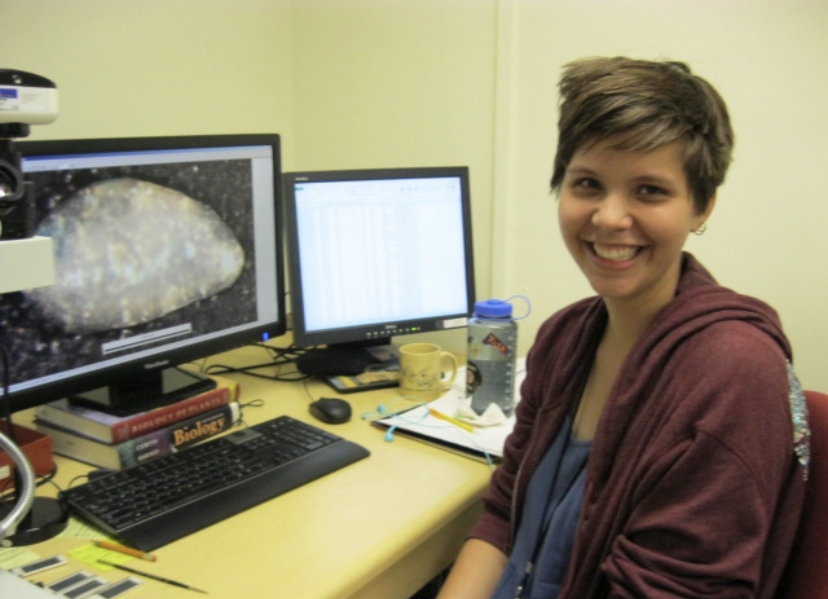
Carmi Milagros Thompson is a museum specialist and paleoecologist. They study fossil marine (saltwater) invertebrates from the Caribbean to investigate how the past ecosystem and environment has shaped the current.
Carmi’s interest in paleontology began during field experiences as an undergraduate student at William & Mary. They went on to complete a master’s degree at the Florida Museum of Natural History, and they are currently a Fellow with AGU’s Bridge Program, which supports continuing education of students from historically marginalized populations, at Ohio State University. Their work tracks gastropod abundance and ecology during the Neogene period (~23 to 2.6 million years ago), using samples in museum collections.

Carmi emphasizes the importance of finding community and mentors who can encourage and advocate for you while you’re on your journey. They found mentors while attending academic meetings, such as the National Diversity in STEM Conference organized by the Society for the Advancement of Chicanos/Hispanics and Native Americans in Science, and in specific programs, such as On To the Future, a program that provides funding for students from diverse backgrounds to attend the Geological Society of America’s annual meeting, GSA Connects.
What advice would you give to a girl or young person who wants to be a paleontologist?
If you’re interested, you are capable! Be confident in who you are and find the people that can see you as your whole self. There are many different ways to being a paleontologist, so keep your options open and stay creative.
Selected works/further reading
Carmi Thompson (personal website): http://bibibivalve.com/
Speaking of Geoscience blog interview with Carmi: https://speakingofgeoscience.org/2023/06/13/back-to-the-future-with-carmi-milagros-thompson/)
Acknowledgements
The GSA Science Communication Internship was a program offered at GSA Connects in Pittsburgh, Penn., designed for student attendees interested in science communication as a possible alternative career path. Interns were paired with GSA’s Science Communication Fellow in order to gain experience in making science clear and exciting, under the tutelage of a professional writer. Students were assigned to conduct interviews with presenters at the meeting and to compile summaries capturing the significance of the presenters’ work for a non-technical audience. Media assignments and mentoring were useful learning experiences and exposure opportunities for students seeking to expand their knowledge into geoscientific reporting.

 Speaking of Geoscience