By Christine Ray, GSA Science Policy Fellow
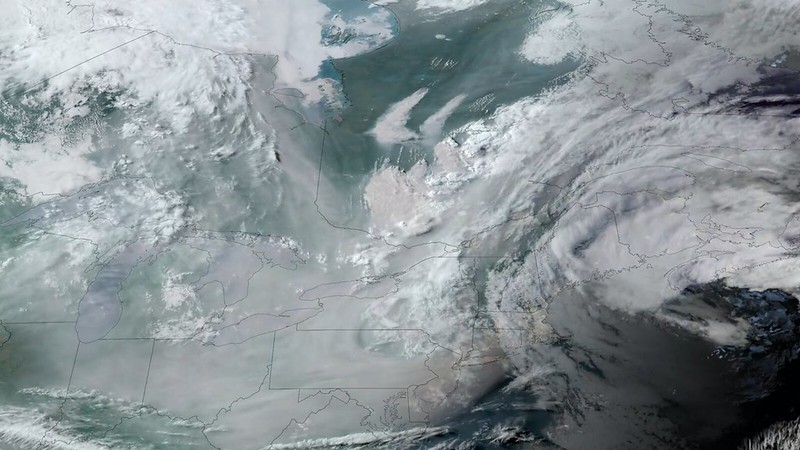
On Wednesday, 12 July, Representative Zoe Lofgren (D-CA), the Ranking Member of the House Science, Space and Technology Committee, introduced the National Wildland Fire Risk Reduction Program Act—an updated version of legislation considered by the committee in 2021. If enacted, this program would 1) improve understanding of, and prediction capabilities for, fire environments, wildland fires, and their impacts; 2) develop and encourage adoption of science-based measures to enhance fire resilience; and 3) improve understanding and mitigation of climate change impacts on fire risk, frequency, and severity. These efforts would be carried out and coordinated across the federal government, involving the National Science Foundation (NSF), National Oceanic and Atmospheric Administration (NOAA), National Aeronautics and Space Administration (NASA), and Department of Energy (DOE), among others.
On the same day, the House science committee held a hearing to examine the nation’s wildfire weather prediction capabilities, discussing the need for coordination between different agencies like that proposed in Rep. Lofgren’s legislation, along with state and local governments, industry, and the private sector. Witnesses at the hearing represented these sectors, speaking to the roles they each could play in improving the response to, and management of, wildland fires.
Mark Goeller, the Fire Management Chief at the Oklahoma Department of Agriculture, Food and Forestry, came to the hearing with a long history of wildland fire management in state forests. He testified that from all of his experiences, he had “an advanced understanding that the key to minimizing loss of life and property depends on fire weather forecasting, early wildfire detection, wildfire preparedness and response.” He explained how his state had partnered with their local National Weather Service forecast offices, utilizing each other’s resources to more accurately predict where fires were likely to start, pre-positioning resources in those locations, and giving the public more advanced warning—a collaborative approach that “can easily by applied to preparedness and response actions nationwide.”
James Peverill, the founder and CEO of robotics company GreenSight, discussed how his company had partnered with NOAA to design a fleet of nano-sized drones called “WeatherHive.” Such a system of drones could measure conditions across large areas of the atmospheric boundary layer—the part of the atmosphere closest to the Earth—allowing models to better predict fire weather conditions and other extreme weather events. “For the specific mission of fire weather, NOAA would benefit from an enhanced mission focus to improve their detection and forecasting capabilities,” said Mr. Peverill during his opening remarks at the hearing. “As a commercial company, we feel we can assist NOAA with this mission by providing critical data that improves the accuracy and timeliness of information, to inform the public and safeguard lives and property.”
The hearing’s final witness, Dr. Ali Tohidi, told the committee about the modeling work his wildfire dynamics research group at San Jose State University was performing to better understand wildfire spread. “The impacts [of wildfires] are projected to grow in severity and magnitude, thus we need our communities to become more resilient,” said Dr. Tohidi in his opening statement. “A key component to achieve this is the ability to accurately estimate the potential progression of the fire through the landscape and our communities. Fire weather models fulfill this objective.”
Dr. Tohidi explained how investing in scientific research like his, and specifically enabling research groups to obtain more and better data, was key to improving fire forecasting, timely evacuations, and community resilience. “The highest priority from the modeling standpoint would be to improve the resolution quality and frequency of the data layers that [go] into these models,” he answered in response to a question from Rep. Maxwell Frost (D-FL) on how fire spread modeling could be more quickly deployed. “Then, if you can invest in the observational campaigns, the experimental campaigns, to better observe these processes free from contamination from suppression activities, we can have a better understanding of the physics.”
Throughout the hearing, witnesses expanded on how partnerships between government agencies, academic researchers, and private industry could be used to tackle wildfire prediction and management goals like those outlined in Rep. Lofgren’s legislation. “Many agencies and organizations, from the local to federal level, play a role in mitigating and responding to wildfires, posing challenges for interagency coordination and efficient use of finite resources,” said the representative in her opening statement. “We can’t just keep responding to disasters—we need to invest more in preventing them… [my] bill would strengthen the federal coordination of research and operation efforts across multiple federal science agencies, [an] efficient and effective whole-of-government response to reducing wildland fire risk.”
Earlier in the summer, when smoke from wildfires in Canada was first starting to affect air quality in parts of the northeastern United States, the Senate Committee on Energy and Natural Resources held another hearing to examine the federal response to wildfires, this time focused on issues with forest management practices, and recruitment and retention among the firefighting workforce.
“Our committee has discussed at length the impacts of climate conditions and past mismanagement of forest that has ushered in a new era of fuels and wildfires,” said committee chairman Joe Manchin (D-WV), setting the stage for the hearing. “We’ve essentially created a perfect storm and, as a result, have witnessed an increase in the occurrence of megafires with communities across the west suffering from tragic loss of life and property.” Senator John Barrasso (R-WY), the ranking member of the committee, agreed that forests needed to be better managed in order to prevent megafires, and added details on how the escalating wildfire problem was influencing firefighters. “One of the major consequences of the wildfire crisis is the effect it has had on brave firefighters. Factors such as low pay, poor work-life balance, and mental and physical health challenges from fighting longer and more brutal fire seasons all are hurting the firefighting workforce,” said the senator.
Witnesses in the Senate’s hearing represented both federal and state government, and testified to their experiences managing wildland fires and their firefighters. Fielding a question from Senator Martin Heinrich (D-NM) about what types of active management were needed in federal forests, Jeffrey Rupert, the director of the Office of Wildland Fire at the Department of the Interior, explained how the country’s history of putting out fires so successfully—particularly in fire-dependent ecosystems where the preservation of biodiversity depends on fire—has led to a buildup of fine fuels (e.g., grass, leaves, and other small plants and plant matter) that, along with climate change, is contributing to the current megafire problem. “There’s really good, solid science support that in addition to mechanical treatment, in addition to all the biomass approaches we have [like] thinning [and] grazing, prescribed fire, reintroducing fire to really address those fine fuels is an important piece that can’t be left out in these fire-adapted systems,” said Mr. Rupert.
Other witnesses spoke more on how low pay, lack of affordable housing, and mental and physical health issues like those mentioned by Senator Barrasso were impeding federal wildland firefighter recruitment and retention, adding that funds from the recent Infrastructure Investment and Jobs Act had been used to temporarily increase the base pay rate for federal wildland firefighters. “We know that the temporary bill pay increase has helped us retain some of our workforce who might have left otherwise, [and] it has certainly brought some new workers into our firefighting workforce,” said Jaelith Hall-Rivera, the Deputy Chief of State, Private, and Tribal Forestry with the USDA Forest Service, addressing a question about the pay raise from Senator Steve Daines (R-MT). “That’s why it is absolutely critical that we avert the pay cliff and put something permanent into place.”
 Speaking of Geoscience