By Elizabeth Long, GSA Associate Director for Diversity, Equity, and Inclusion
As we look forward to commemorating a remarkable milestone, the tenth anniversary of our On To the Future (OTF) program, we reconnected with some of our esteemed alumni to hear about the impact OTF had on their lives, and to learn more about their current pursuits and the legacy they continue to forge. We spoke to Kadie Bennis about her experience with this groundbreaking program.
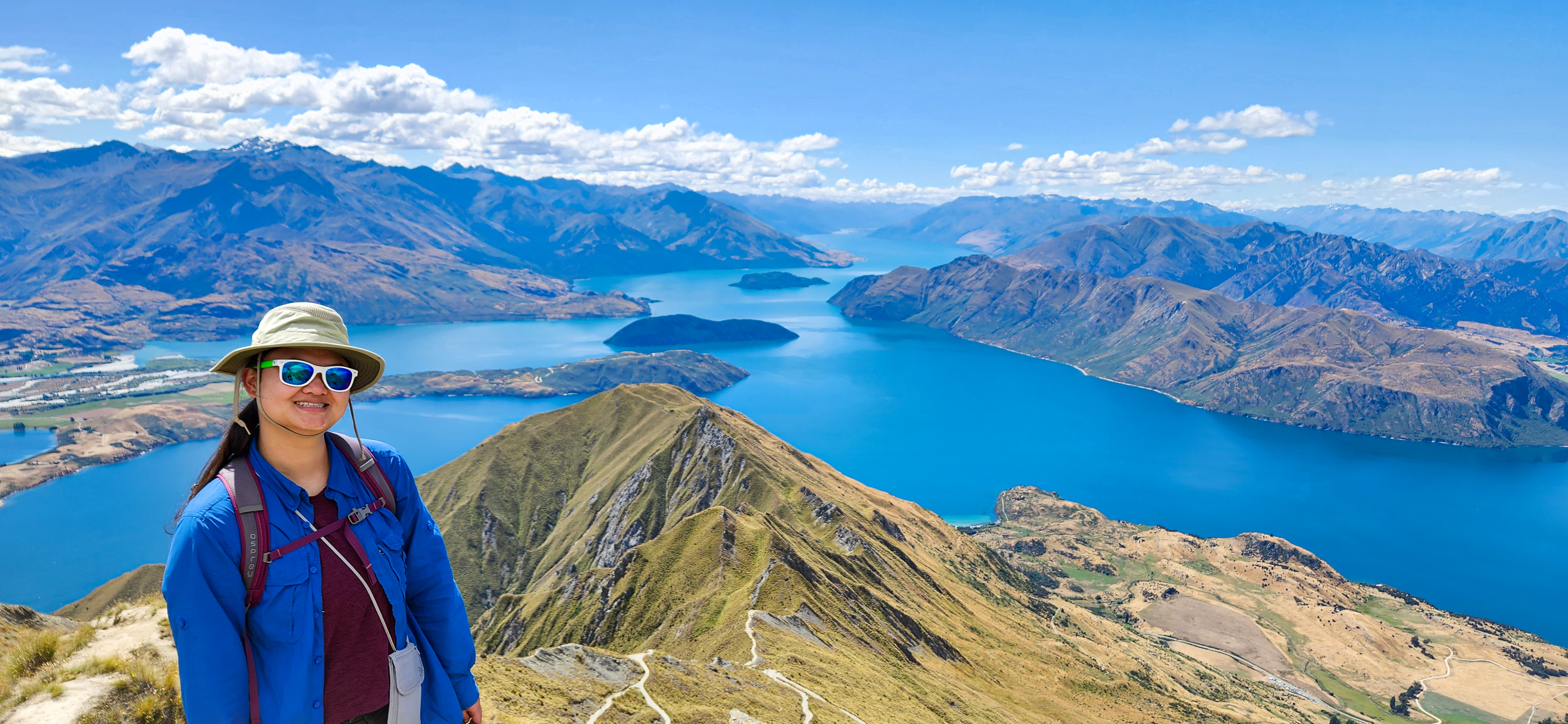
GSA: When did you participate in OTF? Where were you in your Geoscience education and career path? Where was the GSA Connects Meeting that year?
KB: I participated in the fall of 2018 at the GSA Annual Meeting in Indianapolis. At the time, I was in the second year of my Master’s degree program and planning on graduating that next spring in 2019.
GSA: Why did you decide to apply to OTF?
KB: I was encouraged to apply to the OTF program through my friend, Joe Nolan, who was in the same grad program as I was. Since I had never been to a GSA conference before and needed funding to attend one, Joe recommended that I would be a good fit for the program.
GSA: What was your experience like in OTF? What aspects of OTF were most valuable to you?
KB: I remember being very nervous as a new attendee to a GSA meeting, because I hadn’t formed any connections yet, I didn’t know anyone, and I didn’t know what to do at conferences other than give my presentation. OTF felt like a safe space to meet new people, to connect and network with them before the conference, and learn what opportunities and activities were available to me as a student at the conference.
GSA: Have you stayed in touch with people that you met during your OTF year?
KB: Unfortunately, I wasn’t able to stay in contact with the people I met at OTF during my first year. I think I was so overwhelmed with the number of people there, the events that I wanted to attend, and the talks that I wanted to listen to. Many of the people who I met at OTF were in different areas of study than me, so I didn’t get to regularly see them throughout the conference.
GSA: Are you still involved in the geosciences as a career path? What are you doing now?
KB: I am currently a volcanologist at the Smithsonian National Museum of Natural History working with the Global Volcanism Program (GVP). I am the primary bulletin report writer for the Bulletin of the Global Volcanism Network that is distributed to volcanologists around the world. I also help maintain the GVP database that archives and reports information on more than 1,300 volcanoes.
GSA: You’ve stayed involved in GSA since your OTF experience. Can you talk about what keeps you involved?
KB: I think GSA Connects is a very unique scientific meeting because it is specially tailored to students, and even more specifically to undergraduate students and students pursuing a Master’s degree. I think this is an important demographic in the academic to career pipeline and there is a huge opportunity to recruit these students, especially those who come from diverse backgrounds, to various projects, programs, and careers. I’ve wanted to stay involved in the OTF program, because I know that it is extremely useful to many students who are going to a conference for their first time, and I want to carry on helping those students navigate the space. For the past five years, I’ve built up a network of friends and colleagues who regularly attend GSA meetings, and I want to bring in new students to help them build their own network and also introduce them to mine if they are in a related field of study. I love teaching undergraduate students how to look for graduate programs, what questions to ask, who to meet, etc., because that is all information that was never given to me as an undergraduate student. If I can make a difference in even one student’s academic and career journey, then I think that effort would all be worth it.
GSA: What would you like to see OTF and GSA focus on in the future? Are there particular events or topics you’d like to see addressed?
KB: I think it would be beneficial to lift up and promote the various minority affiliate groups at GSA, because undergraduate students especially are not aware of what groups there are. And during the conference, meetups and dinners (GSA-sponsored and non-GSA-sponsored) are usually planned to connect with other students who identify similarly. These groups include, but are not limited to, the Asian American and Pacific Islander in Geosciences group, Black in Geoscience, GeoLatinas, the International Association for Geoscience Diversity, Earth Science Women’s Network, etc. One thing that also stuck out to me in particular at last year’s GSA Connects meeting in Denver, CO, was that many of these events were held at or around the same time on the same night, so many of the students who were part of each of the different events had to jump from one event to another. I think it would be an improvement to stagger these events so students can spend more time at each event and not feel rushed. Additionally, the room for the annual LGBTQIA+ event was especially small given the number of students who attended, and it was located in a back corner of the hotel, which felt a little hidden away. It was likely a logistical “which room was available for which event” decision, but it was something the students definitely noticed.
Editor’s note: This interview was edited for brevity and clarity.
As you read the impact of OTF for these participants from ‘then to now’ and would like to help this program continue to expand, please consider joining our community of support.
If you are an On To the Future program alum and are interested in sharing your story, please reach out to me at elong@geosociety.org.
###
 Speaking of Geoscience